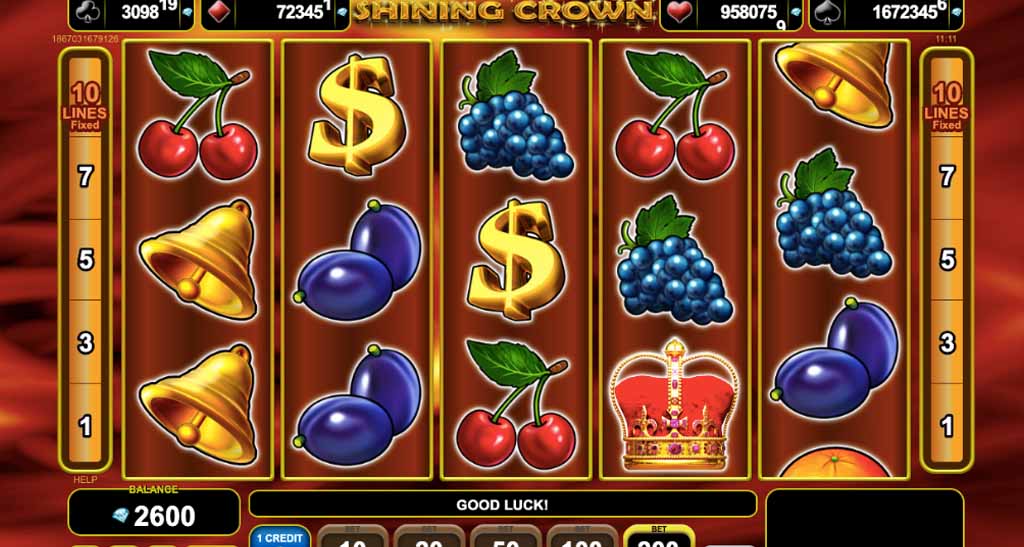
Grasping how the house edge works is one of the handiest steps any player can take before committing funds to a casino platform. The house edge indicates the built-in statistical advantage that ensures the operator earns over time, yet it varies dramatically from one game to the next. By discovering how these percentages are computed, how they manifest in different titles, and how they work with bonuses and wagering requirements, players can make more educated choices about where and how to place their bets.
Defining the House Edge in Simple Words
The house edge is the share of each wager that the casino expects to keep over the long run. It is expressed as a fixed mathematical figure derived from the structure of a game and the payout table attached to each outcome. For example, European roulette offers a house edge of 2.70 percent because of the single zero on the wheel, while American roulette multiplies that figure to 5.26 percent due to the additional double-zero pocket. Having these numbers allows players to evaluate games directly rather than depending on luck or intuition alone.

House edge should not be mixed with short-term variance. In any single session a player may win or lose far more than the theoretical percentage implies. Over thousands of decisions, however, the edge becomes apparent in the overall results. This separation matters because it clarifies why two players using identical strategies can encounter completely different outcomes within a short time frame.
Providers display the house edge for many games in their help or information areas. When these figures are unavailable, players can determine them using the pay-table and probability of each outcome. Studying this data before choosing a game avoids unpleasant surprises once real money is at stake.
Practical Steps Before Making Your First Bet
Start by confirming the platform’s license and checking the complete terms for any welcome offer. Note the wagering requirement, eligible games, and maximum bet restrictions during bonus play. These details dictate whether the promotion provides genuine value or simply amplifies exposure to the house edge.
Next, examine the game library for titles whose house edges match your risk tolerance and session length. If you favor low-edge games, give priority to European roulette, blackjack with favorable rules, or video poker variants with documented optimal strategies. If you like slots, compare the published return-to-player percentages rather than depending on visual themes or jackpot size alone.
Define deposit and loss limits ahead of the first session. These tools are most effective when activated in advance rather than after a losing streak has already started. Consistent application of these steps transforms house edge from an abstract concept into a manageable factor within an overall playing strategy.
The Ways Game Categories Vary Concerning Their Edges
Slot machines usually carry higher house edges than table games, yet they also present the widest range of volatility levels. A classic three-reel slot could return 96 percent of wagers over time, while some progressive jackpot titles go below 94 percent. Video poker, by contrast, may reach a theoretical return of 99.5 percent when players follow optimal strategy on full-pay Jacks or Better machines.
Table games such as blackjack and baccarat typically fall between 0.5 percent and 2 percent when basic rules are followed. Blackjack edges rise quickly if a player deviates from correct strategy or if the table applies unfavorable rules like a six-to-five payout on natural blackjacks. Baccarat banker bets stand near 1.06 percent after the 5 percent commission, making them among the lowest-edge options available on most platforms.
Live dealer versions of these games maintain the same mathematical edges as their random-number-generator counterparts, provided the rules and number of decks stay identical. The addition of a human dealer does not affect the underlying probabilities, although it could decrease the pace of play and therefore reduce hourly exposure to the edge.
Slots versus Table Games
Slots attract because they demand no strategic decisions, yet this convenience comes at a cost. Each spin is independent, and the return-to-player percentage is fixed regardless of previous results. Table games, however, reward knowledge. Blackjack players who memorize basic strategy charts can reduce the house edge below 0.5 percent on favorable rules, while those who rely on hunches might face an edge exceeding 2 percent.
Another distinction lies in speed. A slot machine can finish 600 spins per hour, multiplying the impact of even a modest house edge. Blackjack tables average 60 to 80 hands per hour, providing skilled players more time to apply strategy before the edge accumulates. Understanding this trade-off helps players decide whether they lean toward volume or precision.
Payment Methods and Processing Times
The speed and expense of funding and payouts influence the overall value of any platform. Credit and debit cards stay widely accepted, yet they often involve three-to-five-day processing for withdrawals and possible cash-advance fees. E-wallets such as Skrill and Neteller typically complete withdrawals within 24 hours once verification is complete, although they may levy a small percentage for currency conversion.
Bank transfers provide larger caps for players who require to move larger sums, but they can take five to seven business days and may trigger intermediary bank fees. Cryptocurrency options, where available, often finalize within an hour and avoid traditional banking restrictions, though price volatility introduces a separate risk factor that players must address.
Verification requirements also influence timing. Most platforms request government-issued identification and proof of address before the first withdrawal. Players who submit clear, correctly formatted documents usually finish the verification process within 48 hours, while incomplete submissions can hold up access to money by a week or more.
Deposit and Withdrawal Limits to Check
Each payment method has its own minimum and maximum thresholds. Card deposits may commence at 10 dollars, while wire transfers often demand at least 500 dollars. Withdrawal caps can renew coingecko.com daily, weekly, or monthly, so players considering larger cash-outs should confirm the current schedule rather than suppose a single transaction will settle the entire balance.
Some platforms enforce a maximum withdrawal per week regardless of balance size. Others allow unlimited withdrawals once verification is complete. Reading the terms before depositing avoids situations where winnings exceed the permitted payout schedule and must be kept on the account longer than expected.
What Distinguishes A Platform Apart from Another
Aside from game variety and bonus value, the transparency of terms and the speed of customer support frequently determine long-term satisfaction. Platforms that disclose full rules, such as deck counts, side-bet payouts, and table maximums, enable players to calculate house edges correctly before gambling money. Vague or incomplete rules force players to guess and boost the likelihood of unwelcome surprises.
Help channels should include live chat with verified response times, an email ticket system for difficult issues, and a searchable support center. Players who check support responsiveness with a simple question prior to depositing gain insight into how quickly problems will be resolved during actual play.
The range of game providers impacts both diversity and equity nokyccasinoau.com. Reputable studios submit their RNGs to independent testing and disclose the findings. Platforms that collect games from several audited providers offer players access to a broader selection of verified return-to-player percentages than those depending on a single, untested source.
Evaluating Software Quality Before Funding
Demo or trial versions enable players to review game mechanics, volatility, and user interface with no financial danger. Spending time in these modes indicates whether the platform’s loading times, sound settings, and autoplay functions match personal preferences. It also provides an opportunity to practice strategy in blackjack or video poker before real cash is used.
Players should watch for any discrepancies between the demo version and the real-money version, such as altered pay-tables or hidden fees. Although rare on licensed platforms, those differences can significantly impact the house edge and should be reported to support immediately.
Mobile Compatibility and Device Switching
Current platforms are expected to deliver steady performance across smartphones, tablets, and desktop computers. Responsive design provides that game layouts, navigation menus, and banking interfaces adapt to different screen sizes without needing a separate application. Users who move between devices during a session should check that their balance, active bonuses, and game history stay synced.
Native applications, when available, can provide faster loading times and added capabilities such as biometric login. However, they also demand storage space and periodic updates. Browser-based play removes these demands but may lose some speed on older devices or slower connections.
Touch-screen controls introduce minor differences in game speed versus mouse or keyboard input. Blackjack players who count on rapid decisions may discover mobile play slightly slower, while slot enthusiasts often appreciate the convenience of portrait mode. Testing a platform on the intended device before investing significant funds avoids interface-related frustration later.
Performance Factors That Impact Edge Exposure
Connection stability determines how quickly bets are placed and resolved. A laggy mobile connection can disrupt live dealer sessions or cause slot spins to queue, practically reducing the number of decisions per hour. Players who encounter frequent disconnections should think about switching networks or using a wired connection when larger bets are placed.
Battery and data usage also count during extended sessions. Superior graphics and live video streams use more resources than simplified versions. Tweaking graphics settings within the game can prolong playtime on mobile devices without changing the underlying house edge.
Bonuses and Their Effect on Effective House Edge
Welcome bonuses and regular promotions can briefly cut or even reverse the house edge when their worth surpasses the statistical disadvantage of the games being played. A 100 percent deposit match up to a stated limit virtually gives the player an additional bankroll that must be bet a certain number of times before withdrawal. The actual cost of the bonus depends on the wagering multiplier and the house edge of the games used to clear it.
Look at a 50-dollar deposit that triggers a 50-dollar bonus with a 30-times wagering requirement. The player must put 3,000 dollars in total bets. If those bets take place on a game with a 2 percent house edge, the expected loss from the edge alone comes to 60 dollars. The bonus thus has to generate more than 60 dollars in winnings just to break even after the requirement is met.
A lot of casinos restrict which games qualify fully toward wagering. Slots often qualify at 100 percent, while table games and video poker may count at 10 percent or less. Players who disregard these restrictions can become unable to withdraw winnings even after completing the required volume of play.
Standard Bonus Structures and Their Concealed Costs
Free spins tied to a deposit or registration usually carry a maximum win cap and a separate wagering requirement on the resulting balance. A set of 50 spins on a 0.10-dollar stake might produce a 25-dollar win, yet that amount must still be bet 40 times before cash-out. The combination of stake size, win cap, and multiplier dictates whether the promotion is worthwhile or simply lengthens playtime.
Cashback offers give back a percentage of net losses over a defined period. A 10 percent cashback on weekly losses appears generous until https://www.reddit.com/r/probabilitytheory/comments/1dsdn0z/is_this_a_good_strategy_for_roulette_at_a_casino/ the player realizes it applies only to losses above a threshold and must itself be played through before withdrawal. These subtleties matter when comparing promotions across different sites.
Licensing, Protection, and User Guarantees
A acknowledged license from an recognized regulatory body provides the primary layer of consumer protection. Licensed operators need to maintain segregated player funds, submit to regular audits, and follow rules covering advertising and dispute resolution. Players can confirm a license by accessing the regulator’s public register and verifying the operator’s registration number.
Security measures encompass SSL encryption for data transmission, two-factor authentication for account access, and regular penetration testing. While no system is completely immune to breaches, platforms that showcase independent security certifications demonstrate a greater commitment to protecting player information than those that provide only generic assurances.
Responsible gambling tools such as deposit limits, session reminders, and self-exclusion options are required under most licenses. Players who set these tools early reduce the risk of exceeding their intended budget. The availability of these features may not ensure responsible behavior, but their omission should provoke questions about the operator’s priorities.
Complaint Management When Issues Arise
Even well-run platforms sometimes encounter payment delays or account verification disputes. Licensed operators must offer a clear complaints procedure and an escalation path to an independent adjudicator if internal resolution fails. Players should record every communication, including timestamps and the names of staff members involved, to enhance their position if escalation becomes necessary.
Keeping records of deposit receipts, bonus terms at the time of acceptance, and game logs can turn out decisive when a dispute involves wagering contributions or maximum win caps. Most regulators mandate operators to retain these records for a minimum period, yet players who maintain their own copies avoid relying solely on the platform’s archives.
Reviewing Performance and Adjusting Strategy
Tracking personal results over multiple sessions shows whether actual outcomes align with theoretical expectations. A simple spreadsheet detailing date, game, total wagered, and net result provides enough data to compute personal return-to-player percentages. Major deviations from published figures over thousands of decisions may signal either unusual variance or, in rare cases, a need to check game integrity with support.
Changing strategy includes moving to lower-edge games when bankroll shrinks, lowering bet size during downswings, and taking scheduled breaks to preserve decision quality. These adjustments do not overcome the house edge, but they stop the common error of increasing bets to recover losses, which multiplies exposure without altering the underlying mathematics.
Over time, players who combine knowledge of house edge percentages with disciplined bankroll management and selective use of promotions build a sustainable approach. The edge stays constant, yet its impact can be reduced through informed game selection and controlled session parameters.
Core Rules That Determine the House Edge
Each game’s house edge is defined by a small number of concrete rules that players can check before they sit down. In blackjack the number of decks, whether the dealer hits soft seventeen, and the payout on a natural substantially alter the percentage. European roulette’s single zero versus the American wheel’s double zero creates a 2.56 percent swing in the edge. Video poker pay-tables show exact credits for each hand; a full-pay Jacks or Better schedule yields 99.54 percent with perfect play, while a 9/6 Jacks or Better drops to 98.45 percent. Reviewing these settings in the information panel prevents unpleasant surprises once real money is on the table.
Side bets and proposition wagers carry their own, usually much higher, house edges. A blackjack insurance bet stands near 7.4 percent, while the “21 + 3” side bet can top 8 percent. Roulette neighbors and final bets add another layer of exposure that many players overlook. Reading the pay-table for each optional wager before placing chips helps keep the overall edge within acceptable limits.
Rule Variations Players Should Verify
Blackjack rule sheets often specify whether doubling after split is allowed, whether surrender is offered, and whether the dealer peeks for blackjack. Each option shifts the edge by fractions of a percent, yet those fractions add up over hundreds of hands. Roulette wheels may include a “la partage” rule that returns half the stake on even-money bets when zero appears, lowering the house edge in half for those specific wagers. Video poker variants such as Deuces Wild or Double Double Bonus Poker have different pay-tables; confirming the exact schedule before play prevents mistaking a 95 percent game for a 99 percent game.
Rapid Checklist Before Sitting Down
- Confirm the number of decks and the dealer’s hitting rule in blackjack.
- Verify whether European or American roulette is offered and whether “la partage” applies.
- Examine the video poker pay-table for full-pay versus short-pay schedules.
- Review side-bet payout percentages and determine whether the extra edge is acceptable.
Bankroll Management and Session Planning
The casino advantage works versus the player over time, thus the size of the starting bankroll as well as the length of each session directly influence how quickly the edge becomes evident. A 500-dollar bankroll on a two percent house-edge game can theoretically withstand 25,000 dollars in total action before the expected loss reaches the entire amount. Splitting that bankroll into smaller session amounts, 100 dollars per visit for example, limits exposure while still permitting enough decisions for variance to play out.
Establishing a win goal and a loss limit before the first bet avoids emotional decisions later. A common method is to leave the table once the session bankroll has increased twofold or once 50% has been lost. These boundaries do not change the house edge, but they cap the volume of money placed at risk during any single trip and keep the overall influence of the edge within a determined budget.
Players who monitor average bet size and decisions per hour can calculate hourly cost. A 10-dollar average bet on a 2% house-edge game runs about 20 dollars per hour. Understanding this figure in advance aids in deciding whether a longer session on a low-edge game is preferable than a shorter session on a higher-edge title.